Understanding the Reticular Activating System: How It Filters Your Reality
The Reticular Activating System (RAS) plays a pivotal role in how we perceive and interact with our environment. This fascinating part of the brain acts as a filter, determining which stimuli grab our attention and which fade into the background. Understanding the RAS can help us appreciate how our brains process reality, influencing everything from our moods to our focus.
Understanding the Role of the Reticular Activating System
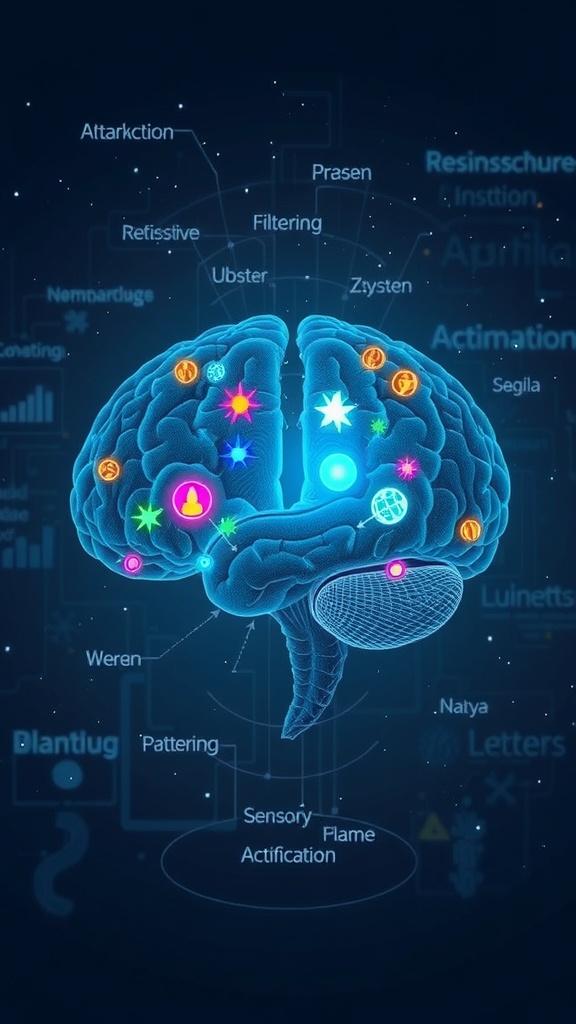
The Reticular Activating System (RAS) plays a key role in how we perceive the world around us. This part of the brain acts as a filter, deciding what information is important and what can be ignored. The image illustrates this concept beautifully, showcasing a brain filled with vibrant symbols and connections.
Each symbol represents different stimuli that our brain encounters daily. The RAS helps us focus on what truly matters, whether it’s a conversation in a crowded room or the sound of an alarm. By filtering out distractions, it allows us to concentrate on tasks and respond to our environment effectively.
The glowing elements in the image symbolize the various inputs our senses receive. Some are bright and attention-grabbing, while others fade into the background. This visual representation emphasizes how the RAS prioritizes certain signals over others, shaping our reality.
Understanding the RAS can help us appreciate how our brains work. It’s fascinating to think about how much information we encounter every day and how our brain selectively processes it. This filtering system is essential for maintaining focus and clarity in our busy lives.