The Impact of Gil Scott-Heron’s “The Revolution Will Not Be Televised”
Gil Scott-Heron’s “The Revolution Will Not Be Televised” is a powerful spoken word piece that critiques the media’s superficial portrayal of social movements and calls for real change. Through lyrical prowess, Scott-Heron captures the essence of activism and the urgency for grassroots engagement, underscoring that genuine transformation goes beyond mere broadcasts and headlines.
Cultural Impact of Gil Scott-Heron’s Work
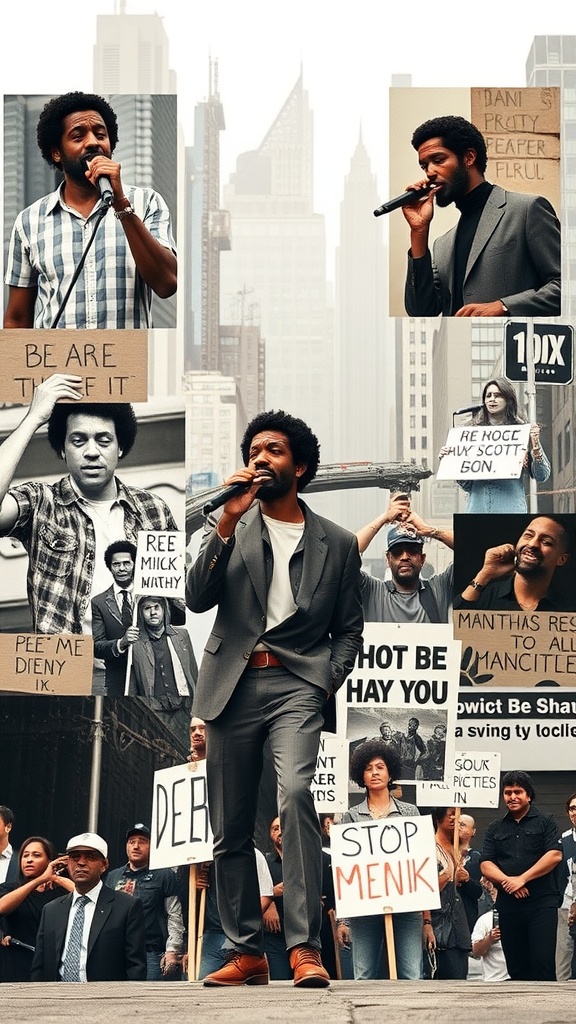
Gil Scott-Heron’s message in “The Revolution Will Not Be Televised” resonates deeply with many even today. The image captures powerful moments of protest and spoken word performance, echoing the essence of his work. It shows individuals actively engaging in social commentary and advocacy, embodying the spirit of change.
The figure in the suit stands confidently, microphone in hand, symbolizing the voice of a generation. Surrounding him are images of diverse people holding protest signs, showcasing unity and resilience. This visual representation reinforces the idea that change is not just a passive event; it requires action and participation.
Scott-Heron’s art transcends mere music; it’s a call to awareness. His work encourages people to reflect on societal issues, making listeners feel connected to their community. The imagery complements this message, serving as a reminder that revolutions aren’t just televised—they are lived.